


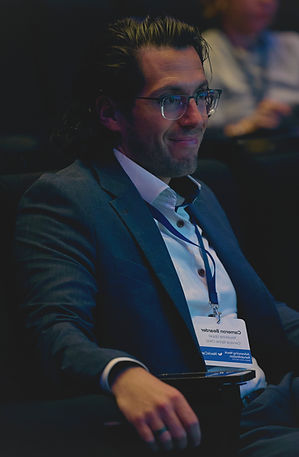
Dr. Cameron Bearder, DC
is a cervical spine-focused clinician whose work center on complex cases involving the craniocervical junction, head and neck biomechanics, and the neuro-sensory systems that depend on them. He built Keystone to combine advanced CBCT imaging with neurological rehabilitation, so patients finally get clear answers.
Dr. Bearder is among a select group of clinicians in the U.S. actively integrating CBCT, cervical biomechanics, and neuro-vestibular rehabilitation for complex head and neck cases. His work bridges upper cervical chiropractic, clinical neurology, visual-vestibular rehab, and advanced imaging.
Meet Dr. Cameron Bearder
A specialty focus on the upper cervical spine
Upper Cervical Expertise
A decade of training focused on the craniocervical junction (C0-C1-C2), with ongoing post-doctoral work in advanced upper cervical biomechanics and procedures.
Visual-Vestibular & Brain Rehab
Fellowship-level training in
neuro-optometry, vestibular rehabilitation, functional neurology, migraine, and concussion care - linking neck mechanics to balance, vision, and central nervous system symptoms.
Advanced imaging & objective testing
Integration of Cone Beam CT (CBCT), cervical kinesthetic testing, posturography, neuro-visual tracking, and other tools to map how the neck, eyes, inner ear, and brain are working together
in real patients.
-
Doctor of Chiropractic (DC), graduating with honors from Life Chiropractic College in Atlanta, GA
-
Fellowship in Vestibular Rehabilitation (FABVR) through the American Board of Vestibular Rehabilitation
-
Postgraduate Training from International Chiropractic Association (Craniocervical Junction Studies), the Spine Research Institute of San Diego (Trauma and Whiplash), Medality (Head & Neck Neuroradiology), the Carrick Institute (Brain Injury, Migraine, Advanced Neurology), the Neuro-Optometric Rehabilitation Association, and the American Academy of Craniofacial Pain.
Why patients seek him out
-
Advanced training in neuro-optometry, vestibular rehab, clinical neurology, and craniocervical junction procedures
-
Extensive experience with complex cases from across the U.S. and abroad, often after multiple unsuccessful approaches
-
National and international lecturer on
CBCT, upper cervical biomechanics, and
neuro-visual/vestibular integration
-
Focus on gentle, instrument-based upper cervical corrections guided by imaging and objective neurological testing
His goal is simple:
provide the depth of evaluation and care he wishes every complex head and neck patient had access to from the start.
Lectures, teaching, and media
Dr. Bearder has presented on a selection of topics, and been featured on podcasts and publications:
-
"The craniocervical junction in sports, performance, and beyond"
-
"Applied neurology with vestibular dysfunction"
-
"3D kinematics of the upper cervical spine
with CBCT"
-
"Connections between the craniocervical junction and the neurovisual system"


Techniques and clinical approach
Keystone incorporates protocols from several evidence-informed upper cervical systems, including Orthospinology, NUCCA, Atlas Orthogonal, and Blair. Rather than adhering rigidly to a single technique, Dr. Bearder uses each patient’s imaging, examination findings, and response to care to determine the most appropriate method.
Corrections are gentle, precise, and instrument-based—designed to be as specific as possible to the individual’s anatomy and joint mechanics. Treatment plans are built around measurable changes in symptoms, neurological function, and structural findings, with the goal of moving patients toward greater stability and less reliance on in-office care over time.
Community and philosophy
A rare Lake Norman native, Dr. Bearder grew up just minutes from where Keystone now stands. After discovering his calling in healthcare through his own experience as a patient, he returned to the area to build a clinic that serves both local residents and patients who travel from out of town for specialized care.
Keystone is actively involved in local and regional initiatives related to brain health, athletics, arts, and community development, and partners with organizations that support patients dealing with chronic and complex conditions.


_edited.jpg)


